
The days of having one profession for life are seemingly over. Everything is changing by the hour, shifting all industries and the entire economy constantly. Travel is becoming easier as well, with new opportunities emerging from every corner.
With this new lifestyle comes the need to change in every person. Firstly, we must learn to adapt to these rapid changes at the drop of a hat, but also, everyone’s interests are widening, and we feel the need to change, and to challenge ourselves.
It’s not surprising, that with everything happening in our lives, almost everyone feels the need to change their career at least once in their lifetime. People who have lived a successful career, CEOs of all ages and genders are thinking of trying something new, investing in something different, learning a new skill.
At the same time, young adults who are just stepping into their professional lives have more opportunities, and more careers to choose from. Because of this, most young adults are not limiting themselves to just one decision that may establish their entire lives. But when this feeling of the need to change arises in someone who’s already established a successful career, the decision may be daunting.
With the world changing so rapidly, new and better opportunities are showing themselves which people have a hard time turning down. Surveys show that in recent years, the amount of people who have already been through a career change, and the amount of people who are thinking about it has grown immensely.
Why Do People Consider Changing Careers?
The number one factor for this desire is salary expectations.

An EdX survey found that 39% of people thinking about changing careers do so because of salary expectations. An average pay raise in America sometimes can’t compete with other opportunities, which is why people are considering totally changing professions for the sake of a better livelihood.
Additionally, work flexibility can also be an obstacle that can influence the decision of changing careers. Finding the optimal work-life balance is very important nowadays, and people prioritize a healthy lifestyle even over high salaries.
The second most common reason is career satisfaction.

As Gen Z young adults enter the market, expectations regarding satisfaction and wellbeing have grown immensely. With this, people of all walks of life have recognized this need, and are expecting more from their companies.
There are a lot of people who realize that their experience and knowledge could complement a higher position, and when “climbing the ladder” isn’t a solution in their current company, they apply for better positions elsewhere. Additionally, burning out, or feeling stuck in their current profession, and acknowledging that advancement is not an option in their current field also factors into this decision.
People who feel unsatisfied by the leadership or office politics in their workplace are also looking for other opportunities instead of settling for something below their expectations. This goes hand in hand with the company’s subpar ethics, goals, and philosophy. People are beginning to prioritize working for companies that aspire to better the world via donations, social programs, or other movements which promote support.
Once a person decides that a change in their profession is what they need, it’s very important to think rationally instead of diving head-first into these dramatic events. Diligent and in-depth research is the first thing people need to do. Focusing on self-assessment is key to finding out your strengths, weaknesses, pinpointing and highlighting your experiences, and recognizing how these can help you grow.
You also need to research opportunities, the job market, the economy, and every other factor that may affect you in this change. With changes as drastic as this, patience is the number one key that you mustn’t lose sight of. People often quit their jobs from one day to the other due to an outburst of emotions, and then quickly find themselves lost, and spiraling into panic.
Instead, the right thing to do is to take a step back, evaluating your situation, recognizing the problem in your current position, and researching the options that you have. This is the key to a seamless shift in careers.
Throughout this hard task, once you’ve recognized the need for the change.
Here are some tips that may help you through this process and speed things up
① Make a List
While this might seem redundant, making a pro and con list could help you a lot in the first phases of your career change. Start by evaluating yourself and your current position. Make a list of things you enjoy in your career and a list of things you don’t.
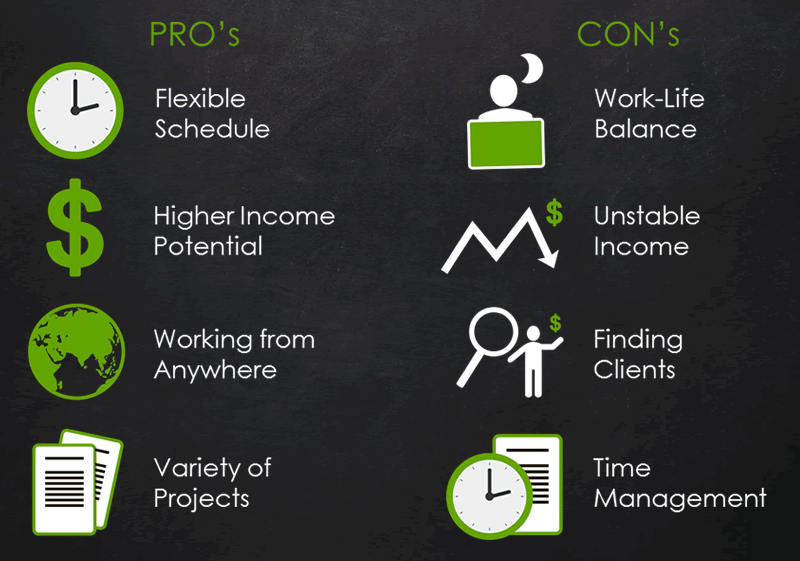
This is the “0th” step when you’re only trying to figure out if this is actually what you need. It will help clarify the size of the problem, and possibly even pinpoint the exact issue you have with the position.
After this, you can start making a second list, which includes all of your passions. This again might seem like an unnecessary step but could help a lot. Maybe something you’re passionate about wasn’t the right career for you then, but there are opportunities now that could complement your biggest desires.
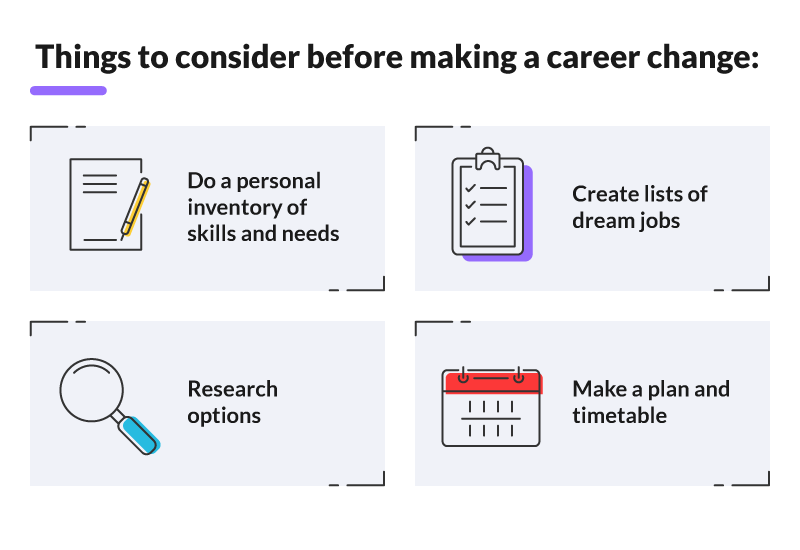
Also, it’s sadly underrated for people to actually enjoy their professions, and as someone who is thinking of drastic change, it’s wise to consider something that might even make you feel happier in your everyday life.
Take some time, even days, or weeks to examine and consider these lists. Maybe a total career change isn’t what you need, perhaps it’s just a change of positions or jobs. Other times, there might be other solutions to certain problems.
Staying in your profession but applying to different companies is another great option for some. But if you don’t know, it’s not a crime to try things out. Start by changing job opportunities at other firms, and go from there.
② Brainstorm

While in the first phase of this process, it’s totally fine to dream big and maybe even be a little irrational. So brainstorm what your dream career would be! It might seem unrealistic at first, but it’s worth considering these wild dreams, and there are even possible opportunities that may have a few characteristics of this dream. What’s your dream position, work environment, hours, pay, etc. Write it all down.
③ Materialize

The biggest and possibly even hardest part of planning a career change is the intricate calculations that come with it. These are mostly financial and regard working hours. When considering these, it’s important to stay grounded and rational.
For example, maybe your dream is going back to school, but you don’t have the financial background to make it happen. Or, you need a fixed amount of salary that you can’t negotiate, and your dream career can’t offer you that.
Consistent income may also rule out freelancing and other part-time, or gig-based jobs. Make a day of it, sit down, and start seriously calculating your incomes, expenses, and needed salary to keep up with the latter.
④ Research

By now, you probably have some dream careers, and also realistic goals set. There might be a few specific options you’d like to explore or even companies you’d like to know better. Now’s the best time to start your research. And apart from digging through the internet, it’s also wise to look up people you might know, or people who are willing to help, who are actively taking part in the job you want to aim at.
Also, research demand, and whether this position will grow in the future. For example, now is probably not the time to become a truck driver, as there are plans to completely automate long-distance vehicles, and let go of drivers altogether.
When you’ve done your research, try to choose just one career path that suits all of your needs best. And if you haven’t found it yet, keep doing your research until the right one comes along. There will always be some compromise needed, but at the same time, there’s usually an opportunity that seems like the perfect fit.
⑤ Evaluate Your Skills
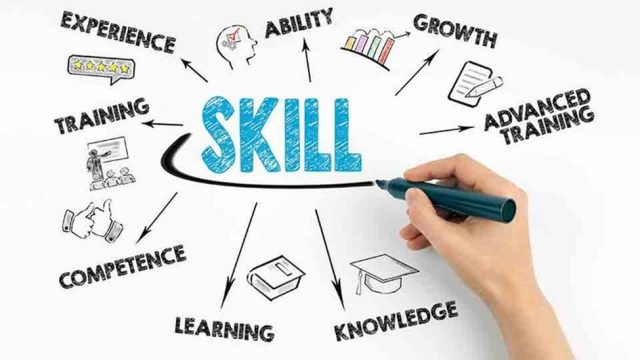
You probably already have an arsenal full of skill sets, experiences, degrees, certificates, and more. And while some or most of these are specific to your current profession, chances are, some of them may prove very useful in your next career.
There are a lot of skills that are very versatile and can be used in different positions. Some examples of this are communication, project management, office management, people skills, etc. Try to find some common ground between your current position and your next one.
In some cases, this common ground is incredibly slim. This is when people might consider learning new skills by going to training or even getting a second degree or a diploma. And while you should avoid financial struggles, for some people, taking time to study again doesn’t cause an issue. And even if you need to work while studying, there are some amazing online courses, night schools, or part-time training available that you should consider.
⑥ Make a List of Job Requirements (on Both Parts)

Job requirements go both ways, and it’s very important to consider the needs of both parties. On one hand, you have a set of requirements regarding salary expectations, working hours, benefits, paid time off, flexibility, further professional or educational opportunities, and so on.
On the other hand, there are requirements on behalf of your future employer as well. Education, recommendations, experience, availability, and all of the aforementioned factors as well. Consider both of these, and be ready to offer something that might benefit both parties.
⑦ Amp Up Your Resume

Each profession and even job opportunity calls for a new resume. Furthermore, chances are that in your current position you’ve already gathered a lot of experience, skills, and recommendations that aren’t in your resume yet.
Taking the time to amp up both your resume and your CV is crucial when shifting careers. Focus on things you have to offer for this new position, but don’t forget to highlight the best parts of your professional life. Making your resume stand out can be tough at times, but even if you don’t have a lot to offer right now for this exact position, stay positive, confident, and don’t be too humble.
⑧ Start Your Job Search

Through connections, you’ve built, and through the magic of the online world, after every list has been made and considered, it’s time to look for actual job opportunities. Reach out to all companies you find attractive, and all connections who may come in handy, and of course, browse the listings day-in-day-out. It’s just a matter of time for something to stick, and that’s your cue to leap.
While all of this may seem daunting at first, especially in the first phases of planning, the pieces all fall together with a little patience, rationality, and a hint of dreaming big. But it’s crucial to wait out the best possible opportunity, and until then, try to stay productive in your current position. The process might take a while, but with the world-changing every minute, the changes are in your favor!