
Have you ever heard of Mussar?
Believe it or not, it is believed that the Jews invented self-help over 1000 years ago. During that period, the Rabbinic scholars were also in the midst of trying to understand goodness and human nature.
The Ten Commandments and other Jewish teachings clearly spell out how we should act. Yet many of us, both now and then, violate the spirit of these commandments quite regularly.
Why is it so hard to practice goodness?
One of the answers to this question is Mussar.
What is Mussar?
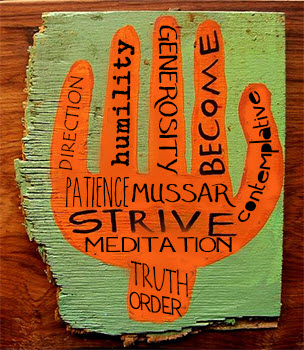
Mussar is a practice that gives concrete instructions and guidelines to help you live a meaningful and ethical life. The first Mussar book was Duties of the Heart by Rabbi Bahya ibn Paquda. It was written in eleventh-century Spain.
Rabbi ibn Paquda clarified a central tenet of Mussar: Following the spirit of the commandments is just as important as following the letter of the Law.
For example, he scorned at a scholar who focused on pointless intellectual exercises instead of working to become a better person. On the other hand, he praised another scholar who worked for 25 years to refine his conduct.
In the ensuing centuries, Mussar literature grew as scholars started contemplating on how various character traits like humility, patience, anger and jealousy contribute to a good life. Mussar became a widespread movement in Eastern Europe during the early 19th century under the leadership of Rabbi Yisroel Salenter.
Rabbi Salenter transformed Mussar from a solitary practice to something the community exercised. Throughout its history, Mussar masters used real examples and described situations that are still relevant today.
Mussar points out that whatever our religion or level of spirituality is, we all have issues and that they don’t change easily. For us to start doing good, we need to find those issues inside us and settle them once and for all- so that they don’t affect us over and over again. The practice provides guidance on how we can begin to make small changes in our lives that will bring healing to our soul and give us greater balance.
Rabbi Elya Lopian (1876-1970) once defined Mussar as “making the heart feel what the mind understands”. I love this definition because we often know what we should be doing, but we just can’t seem to make ourselves do it.
See Also: 10 Things You Should Know About Creating Your Happiness
Real World Spirituality

Compared to Mussar, Kabbalah is the more widely known branch of Jewish spirituality. It is mystical in that it focuses on the unseen forces in the universe. Mussar, on the other hand, is more practical. It focuses more on our inner world and how it impacts the choices we make every day.
I have to admit that I don’t know a lot about either traditional or modern Kabbalah. I do know, however, that traditional Mussar and Kabbalistic literature overlap in some way. If you are currently a seeker who has explored Kabbalah, Mussar will complement and enrich your understanding. If you find Kabbalah a bit too “out there,” you’ll find Mussar helpful since it is a very grounded practice.
In Judaism, we don’t wake up, decide to be spiritual, and then book a retreat to a mountain top for contemplation. It requires a lot of inner work to change our very soul so that we become better people. We don’t expect to become great overnight. Instead, we strive to become better than we were the day before.
One of my teachers, Alan Morinis, once said that all people have their own unique spiritual curriculum. It means that we all have our own path in life, with a unique set of challenges and opportunities. We face the same test over and over again until we pass it.
For example, my trait of Humility was once out of balance as I used to be arrogant. This arrogance damaged my relationship with others for years, especially my coworkers. I was caught in a cycle of starting well on a job and then gradually losing the support of my colleagues because of it.
When I started bringing my Humility into balance and gave more room for other people’s opinions, I became a lot easier to work with. As a result, I was spared a lot of unnecessary stress and conflict.
This example also illustrates what Mussar teaches- actions do count. Most of us have good intentions, but, more often than not, our intentions don’t translate into good actions. Mussar brings our actions and intentions into alignment with Jewish values.
Rabbi Hillel summarized this best: “That which is hateful to you, don’t do to another. The rest [of the Torah] is just detail.” These phrases translate to a more popular saying: “Do unto others as you would have them do unto you.”
Whether or not you are Jewish, it is hard to argue with this golden rule. But, once you’re able to put this idea into practice, you’ll find it easier to do good and be good.
See Also: How to Become a Spiritual Badass – The 20 Laws of Spiritual Power
From The Spiritual Practice of Good Actions by Greg Marcus, PhD. © 2016 by Greg Marcus, PhD. Used by permission from Llewellyn Worldwide, Ltd.www.Llewellyn.com.