
What does it take to become a successful entrepreneur? A good idea? A great team? Or none of the above?
One thing successful entrepreneurs all have in common is that they read. In case you’re looking for a great place to start, here are the 5 most recommended business books by today’s entrepreneurs as well as the best tips you can learn from each of them.
The Lean Startup – Eric Ries
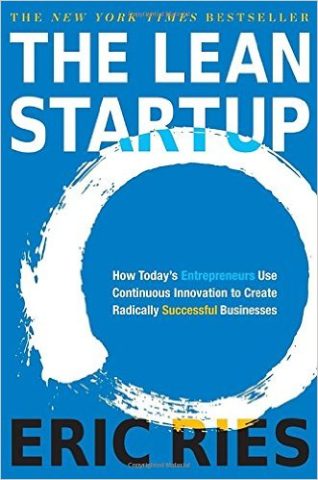
Traditional management consists of developing a strategy and overseeing the people executing it.
The manager creates a plan, sets milestones, and delegates. Startups, on the other hand, can’t predict their own future because they have no past. They don’t know what their customers want, and they don’t know which approaches are best for finding customers that can make the business sustainable.
Startups need an entirely different approach, and that’s where Eric Ries’s book, The Lean Startup, is valuable. The Lean Startup method helps companies develop sustainable business models by encouraging continuous product creation while concentrating on consumer feedback.
Ries, as an entrepreneur, bases the method on two important business concepts: lean manufacturing and agile development. And it’s not just a product of experience; it’s actually backed by several case studies which have been pulled together from the last few years.
In keeping with the lean protocol, Ries’s top piece of advice is this: don’t waste time on developing a product in the beginning. Instead, launch a basic model and see if it will sell. If not, iterate, iterate, and iterate some more.
Rework – Jason Fried & David Heinemeier Hansson
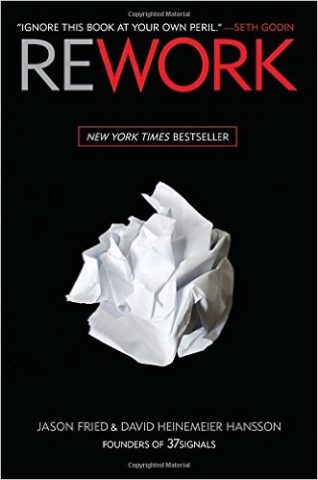
Rework is not your traditional business book. Instead of advising you to run your business the conventional way, it offers unorthodox strategies in communicating and crafting your products.
These tricks come from people who know what they’re talking about. Jason Fried is one of the original founders of 37signals. His co-founder, David Heinemeier Hansson, is the creator of Ruby on Rails—the scaffolding for Twitter, Hulu, and thousands of other web services.
Fried and Hansson based Rework’s lessons on their own journey- from starting up to upscaling their business to the point where it generates millions of dollars annually.
One important concept that the duo highlights in Rework is that you actually need less than what you think to start your own company—have it less figured out, fewer resources, and basically less of everything.
Fried recommends adding value for your customers by knowing what not to sell. You don’t need to offer every feature out there; instead, focus on what you do great and get rid of the “nice-to-haves.” You’ll be surprised at how that will transform your business.
How to Win Friends and Influence People – Dale Carnegie
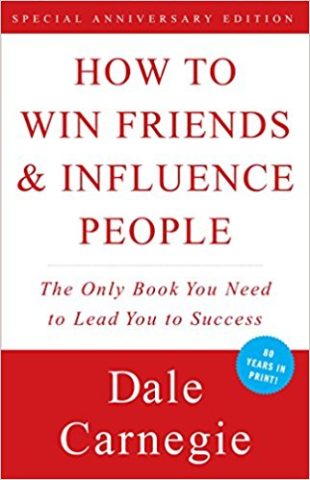
You’ve probably already heard the name Dale Carnegie.
He was an American speaker and consultant on communications and motivation. He also happens to be known as the creator of the self-development genre—a title he earned by writing the bestseller How to Win Friends & Influence People.
Even today, Carnegie’s book keeps on flying off of shelves and it’s actually isn’t surprising. It’s full of lively anecdotes featuring people like Abraham Lincoln and Theodore Roosevelt.
It’s very relatable as well. Carnegie offers up a lot of great, common sense tips in his book. One of the most useful nuggets is this: never openly criticize people.
And it’s not because you’ll hurt people’s feelings (though well you might); it’s actually more about being strategic and practical. Carnegie learned that when you criticize people, they’ll never change their behavior. To have a successful interaction, the book encourages you to empathize, forgive, and accept their shortcomings instead.
Think and Grow Rich – Napoleon Hill
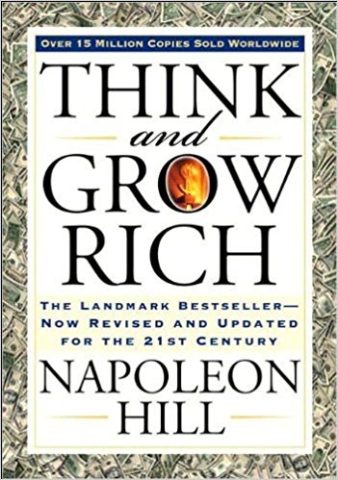
Journalist and advisor to President Franklin Roosevelt, Napoleon Hill, was asked by industry magnate Andrew Carnegie to investigate the methods of the 500 most successful people of his time. Hill talked to the world’s richest men, top politicians, famous inventors, writers, and captains of industry—and then wrote the book.
Among other things, Hill learned a lot about the importance of the company you keep. He hypothesized that you are the average of the five people you spend the most time with.
Naturally, it’s important to surround yourself with intelligent, positive, and supportive people. Hill even had a name for this: the Brain Trust.
Hill held that if two or more people who work well with one another combine their skills, talents, specialist knowledge, experiences, relationships and all other resources and use them to accomplish the same shared goal, the result will be more than just a sum of its parts: it’s a surplus with which you can achieve things you could have never achieved alone.
The 4-Hour Workweek — Timothy Ferriss
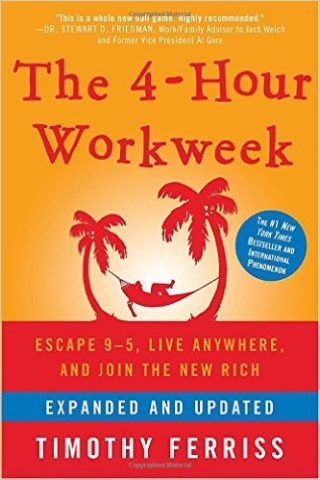
American entrepreneur and writer, Tim Ferriss, wrote this controversial classic based on his own experience in remaking his life. After founding a company in 2001, he worked so hard that a burnout forced him to take a break.
He then took off to travel the world and was surprised to find how he could run a profitable business from anywhere in the world – and with only a few hours of work per week. He wrote The 4-Hour Workweek and shared those secrets.
In the book, Ferriss advocates abandoning the traditional 9-5 job as a modern desk slave. Instead, he encourages living a life that concentrates on enjoying while still achieving big goals.
How do you exactly do that?
One of its critical aspects is learning to let go of the things you don’t really need to do, like, for example, micromanaging. A great tip from Ferriss’ book is this: Don’t babysit your team.
Instead, only get involved in exceptional cases. By giving them freer reign, you don’t only empower them but you also get to have more time for yourself to do the things you want to do.
As much as possible, try to read these books in one week. If you liked what you read but would like to know more about the key concepts from these books before you buy them, I recommend trying out Blinkist. They’ve condensed the five books above—plus about 1,500 more—into bite-sized reads for mobile devices.