


Estate planning remains a gap for many Americans. In 2025, Caring.com conducted a Wills and Estate Planning Survey and found that 24% of people have a will. According to the same survey, only 13% have a living trust.
The number of deaths is also indicative of how many families may require future estate settlement. The Centers for Disease Control and Prevention reports that in 2024, the latest year for which statistics on deaths are available, 3,072,666 people passed away in the United States.
Probate is how a person’s affairs are settled after they die. When heirs or beneficiaries do not disagree about the deceased person’s will, the estate, or the distribution of assets, the process is considered a non-contested probate case.
A probate case may not be contested, but there is still work to be done. The steps include authenticating the will, valuing the assets, paying any outstanding taxes and debts, and distributing the assets to the heirs and beneficiaries.
Knowing how non-contested probate works can help families prepare for what will happen. Let’s take a closer look.
What “Non-Contested” Actually Means
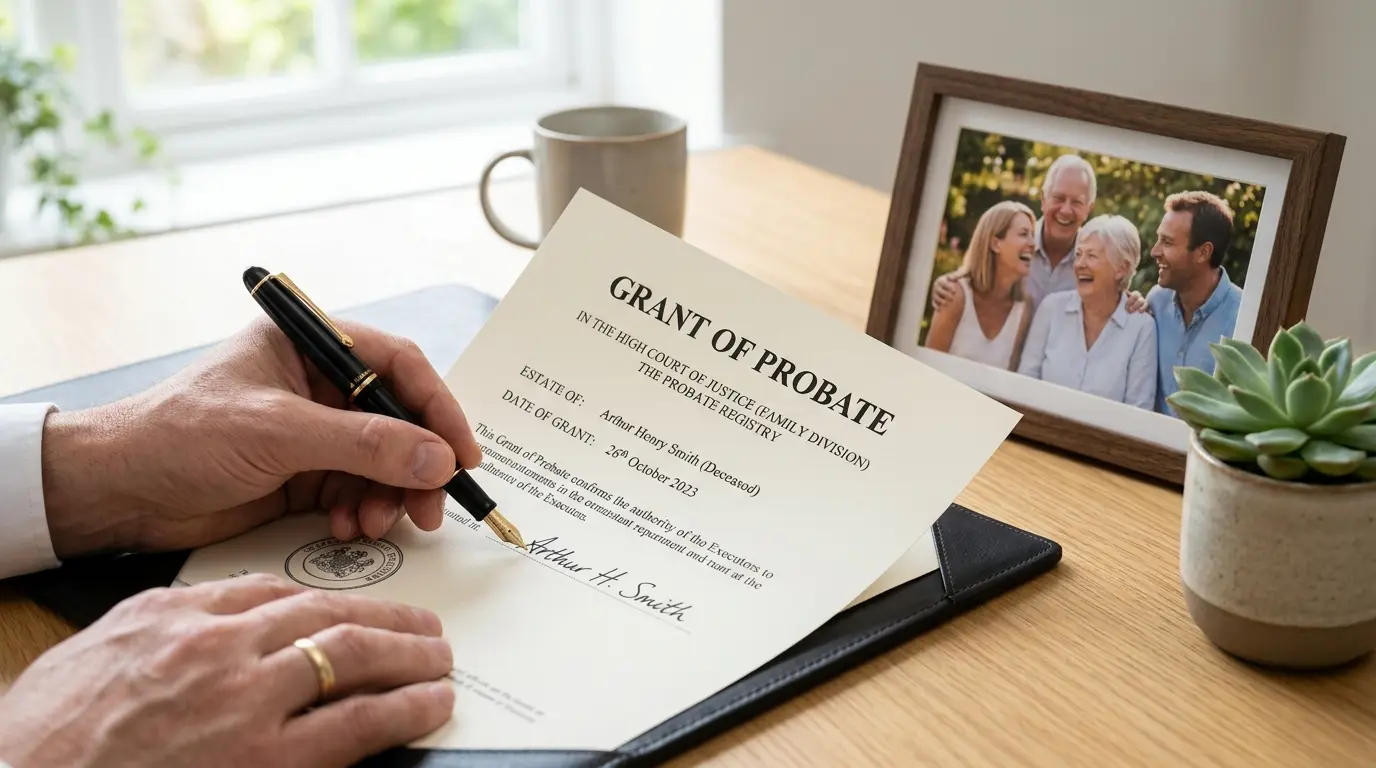
A probate dispute arises when there is an objection to the will’s legality, the executor’s suitability, or the asset valuation/distribution.
Absent one of those objections, probate proceeds as an administrative matter. The court will still oversee the process, and its involvement will largely be limited to determining whether the legal conditions have been fulfilled.
In situations where no one contests, the person seeking to manage the estate petitions the court to appoint them as the estate’s personal representative. If a will exists, an executor is appointed. An administrator is appointed if no will is present. Upon approval, the appointed representative takes charge of identifying and contacting beneficiaries and creditors, managing and assessing the estate’s property, settling debts, and finally, conveying any remaining property as stipulated by the will or as mandated by the relevant state intestacy laws.
Each phase involves its own set of rules and filings, but no judge has to resolve a dispute between opposing sides.
Why Simplified Procedures Exist for Smaller Estates

Not every estate needs to go through the full non-contested probate process described above. In many states, like California, there are alternatives available for processing estates that are simpler in nature than the complete probate process. Undergoing the probate process can be overly expensive in case of small estates.
The state of California has made substantial changes to this effect recently. One option is the Petition to Determine Succession to Primary Residence, a streamlined court process that replaces full probate. It applies when the person died on or after April 1, 2025. This option also requires a person’s primary residence in California to be worth $750,000 or less, measured before subtracting any mortgage.
That petition still requires an appraisal by a court-appointed probate referee, notice to heirs, and a brief hearing, and it can’t be filed until 40 days after the death. Still, it moves considerably faster than formal administration.
These straightforward options only work when the conditions of the estate are met and when there is no dispute. Once there is a dispute, even with a small estate, the case can become more complicated. Disagreements can occur with regard to the will, the estate value, and inheritance rights.
What Non-Contested Cases Still Require

Even without a dispute, a non-contested probate case still has real legal requirements that a personal representative has to satisfy correctly. Creditors have to receive proper notice and a defined window to file claims.
Heirs and beneficiaries have to be formally notified, not just informed casually. Assets have to be properly valued before they can be distributed. Some states require a formal appraisal. Skipping or mishandling any of these steps, even with everyone in agreement, can expose the personal representative to personal liability or delay the case regardless of the underlying goodwill among the parties involved.
This situation is part of why even non-contested probate benefits from legal guidance. The absence of a fight doesn’t mean the absence of legal complexity.
Even a personal representative in good faith can make a procedural error that causes delays or forces steps to be redone, especially when complicated matters like properties in another state, business matters, or forgotten beneficiary designations get involved.
When a Non-Contested Case Can Still Take Time
Non-contested doesn’t mean instant. Every estate has to go through statutory notice periods, appraisal timelines, and court filing deadlines. Even when everybody is in total agreement, these processes take time.
There’s often a disconnect between how fast families think a non-contested estate will settle and how fast it actually will. While family members might all agree, notification periods and the courts have minimum timeframes that usually push settlement out for a few months or even longer.
Keeping that distinction in mind upfront, between “non-contested” and “quick,” helps set realistic expectations for what the process actually involves from petition to final distribution.
















Comments