




Do you have the level of flexibility, freedom and fulfillment that you crave in your career?
Are you managing every aspect of your life with the deftness that you wish for?
It is quite possible that this is not the case. Maybe you are feeling satisfaction in some areas of your life, but lacking a feeling of contentment in others.
Let’s face it.
An average day in a freelancer’s life is marked by relentless hustling, doubts and exhaustion. The journey is often lonely. At one point, you’ll even feel the urge to say goodbye to some of your most cherished dreams– a six-figure income, a vacation with the family in exotic destinations and so on.
This is where the Kaizen approach fits. It will help you to improve certain areas of your life.
Kaizen: Overview
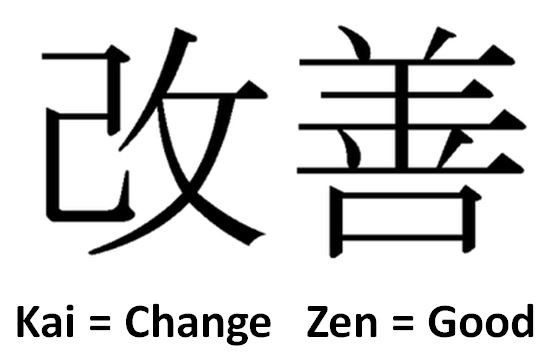
In English, Kaizen means “positive change” or “change for better.” It is comprised of a series of small, simple steps.
As a business philosophy, it has been popularized by Toyota in the middle of the last century. Since then, it has been successfully implemented by thousands of corporations, small businesses and individuals.
The uncomplicated nature of this technique makes it a preferred choice by many. With continuous commitment, it helps you to get to the root of the problem and resolve it for life.
Because of its impact, Kaizen is now used even in Psychotherapy. In other words, it not only affects business processes but your entire life, too. However, remember, it is no silver bullet and shouldn’t be treated as such.
“What we achieve inwardly will change outer reality.”
Plutarch
What are the benefits of using Kaizen?
You have turned your passion into a career, but you don’t want to stop at just that. You want to taste steady success. The aim of Kaizen is to help you to do exactly that. In the process you will:
- Improve the quality of your work
- Develop new skills
- Fuel creativity
- Increase productivity
- Ensure customer satisfaction
- Reduce waste
- Maintain an organized workplace
- Lower the operational costs of your freelance business
- Derive immediate benefits from your initiatives
- Blogger and entrepreneur, Yaro Starak, recommends using Kaizen to boost your blogging income
- Enjoy a better work-life balance
See Also: 5 Ways to Balance Work and Family Time Even if You’re a Workaholic
Try to make Kaizen a part of your daily life. Until that happens, make sure to use this technique every time you score a big win. It will then help you to carry on the momentum. You should also use the power of Kaizen every time a major decision backfires. It will offset the negative effects of the transition, if there are any.
How to apply Kaizen in your career?
Identify the area to work on. This is a pre-requisite to making any kind of improvement. Think of the most gnawing question that you have at the moment.
Here are a couple of examples to help you start:
Sheila: How can I reduce my working hours and still accomplish all of my tasks?
Eric: How can I earn a more stable income from my freelance business?
Try to recognize the underlying problem.
In Sheila’s case, the concern is with time management and overworking. For Eric, it is a lack of stable and sustainable income. His question reveals an intention to halt the “feast and famine cycle” and improve his living conditions.
There could be other reasons behind these wishes, such as freeing up time to learn new skills, experimenting with a side hustle, spending more time with the family or globetrotting etc. We will know shortly.
“It is not enough to do your best; you must know what to do and then do your best.”
Dr. Edwards Deming
Write down your goal. For Sheila, it would be how many hours she prefers to be working per week. Like Eric, if you are yearning for a more “stable income”, define how much per month would satisfy you and your needs. Don’t bother about making mistakes in your calculations. You will get to revise these further down the road.
The 5 Whys
Let us begin with root cause analysis using a very simple technique known as ‘5 Whys’ or the ‘5 Why Analysis’. Question the problem statement with “Why?” and make sure that your question has a specific answer.
It may not always be possible to identify the root cause in 5 steps only, but continue to ask “why” until you get to the root of the problem. To prevent wandering off from the topic, especially in the beginning, conclude your answer with “therefore” and see if it logically links back to the previous statement.
This was the 5 Why analysis done by Sheila.
Problem Statement: I am working for over 60 hours between Monday and Friday. I don’t even have the weekends free for me.
- Why am I forced to work for more than 60 hours a week?
Ans: I’m juggling between multiple projects. - Why am I working on multiple projects at once?
Ans: My income is low. I need to work on as many of them as possible to make the ends meet. - Why is my pricing low?
Ans: There’s far too much competition. - Why am I failing to rise above others?
Ans: I’m unable to differentiate my offering from the rest. - Why am I unable to do so?
Ans: I’m yet to gain specialized knowledge in any particular field.
Identified: Skill issue
This was Eric’s 5 Why Analysis.
Problem Statement: I’m unable to earn a stable income.
- Why am I failing to earn a stable income?
I never seem to have long-term projects. - Why don’t I have long-term projects?
Ans: I’m not able to find clients who can offer high value and long-term projects. - Why am I unable to attract such clients?
Ans: Where are they? I don’t know a possible place where I can meet them.
Identified: Issue with marketing and communication
Try not to jump to any conclusions at this stage. Do not cut the analytical phase short. This will ultimately lead you to the right path.
The Ishikawa Diagram
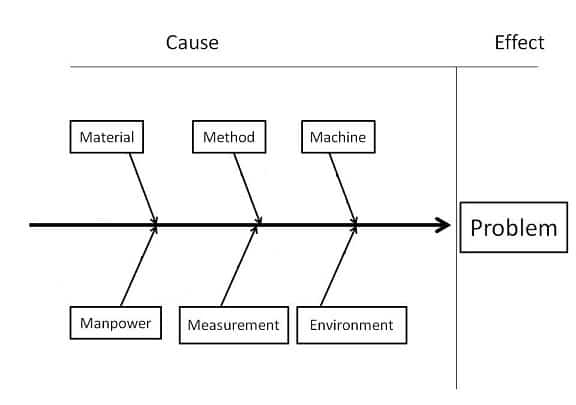
The Ishikawa or Fishbone diagram is another very effective tool for root cause analysis. It was pioneered by the organizational theorist, Kaoru Ishikawa.
The Ishikawa Diagram is generally used in combination with 5 Whys. Any concerns faced by you are divided into 6 to 8 broad categories: machine, method, people, materials, measurement and environment.
Now, brace for some action!
You have gained an insight into the actual nature of your most pressing concerns. Let us try to improve the situation one step at a time.
What has been taught in The Art of War all those years ago holds true even today.
“In warfare, first lay plans which will ensure victory and then lead your army to battle; if you will not begin with stratagem but rely on brute strength alone, victory will no longer be assured.”
This is a war for you. It’s a war to root out any inefficient processes from the system and to refine them to your liking.
Plan
Brainstorm the steps that will help you to move closer to your goal. In case you are facing a skill issue, identify what skills you need to develop. How much time do you need for that? How much time can you dedicate each day to practice? Do you need outside help? What’s the investment (financial) needed to acquire that skill?
Like Eric with his problem on marketing and communication, you need to decide on how much time each day you need to dedicate to solving the issues. How can you manage your routine without any additional stress? Can you automate some of your repetitive tasks? Do you need external help like referrals, membership to professional associations etc, to fuel your marketing activities?
It is normal not to find every step in the planning stage to your liking. Mark out those that seem to be particularly problematic or scary. Differentiate your to-do items into ‘to-be-done-immediately’ and ‘to-be-done-in-30 days’ time.
Eric was apprehensive about face-to-face meetings. Cold calls also scared him. He needed some time to mentally prepare for those steps. He created his itinerary accordingly.
Plan your actions for a short period of time but make sure it doesn’t exceed a week to 10 days.
Do
Start putting your plans into action. Note down the results of your experiments. Keep logs of the problems that you’ve faced when performing these tasks.
Check
Study the results and issues faced after 7 or 10 days. Compare them with your anticipated results and make adjustments where necessary.
At the end of the first stage, Sheila found it extremely difficult to set aside some time every day to study. She decided to dedicate two hours every Friday afternoon for this purpose. This modified schedule suited her better.
Eric found his initial efforts to be rather disheartening. He was using email to reach out to potential customers. However, he received zero responses in the first week. He, therefore, requested a friend’s help.
Act
Begin acting on the revised plan. Once again, set a small target.
Sheila was trying to venture into medical writing. Her time constraints, as well as her financial condition, at the time prevented her from getting the necessary certifications. She decided to brush up on her industry knowledge and enter the commercial arena of the healthcare industry for the time being.
On the other hand, together with his friend, Eric went to meet a few business owners in his area to have an informal chat. They were well-prepared for the interviews and took detailed notes of all of the business issues discussed during their conversation.
He repeated the process over the following few weeks. Eventually, one of them connected Eric with the owner of a top real estate development firm in the city. He was impressed by Eric’s industry knowledge and offered him a three-year contract.
Both of them stayed committed to the process and made Kaizen a part of their lives. They understood that:
“To exist is to change, to change is to mature, to mature is to go on creating oneself endlessly.”
Henri Bergson
How to develop a Kaizen mindset?
To get the best results, try to develop a Kaizen mindset actively. Dedicate 10 to 15 seconds every day to do so. The success of this philosophy depends on it.
Here’s how:
- Be willing to believe that everything can be and should be changed for better.
- Strive for improvement in every day of your life.
- Focus on how-to-improve rather than why-can’t-something-be-improved.
- Don’t criticize anyone.
- Spare yourself from self-pity.
Why Kaizen fails or may fail?
Kaizen isn’t about producing sudden or dramatic results. It is based on the philosophy of sustained improvement, the sum of which may be greater than any sudden gain.
Staying dedicated to the process can sometimes be difficult. This makes it important for you to take a time-out and to celebrate any small successes on the way. If you find yourself stuck, don’t hesitate to discuss it with someone you trust. Kaizen encourages a collaborative approach.
Any system is only effective when you take it and modify it into your own. Kaizen is not meant to be a set of rigid guidelines. Don’t be afraid to revise the steps to suit your needs.
Now that you are aware of the basics of this philosophy, you can go through the process of constant review and adjustment. Eventually, you will know what to leave behind and what to carry forward with.
So, which aspect of your creative life have you decided to improve today?















Comments