Kurt Cobain’s death has remained one of the most controversial and widely debated topics in rock history. Was it suicide or homicide? It’s been nearly three decades since Cobain’s death, and still, people are questioning the circumstances surrounding it. A lot of focus has been placed on Cobain’s suicide note, the heroin overdose, and the autopsy findings. Still, many researchers believe that Cobain’s death was not as straightforward as we’ve been told. Let’s take a deep dive into this mystery and explore the possibilities.
The death of Kurt Cobain, frontman of Nirvana and a defining voice of the 1990s, remains one of the most scrutinized events in music history. On April 8, 1994, Cobain’s body was discovered in his Seattle home, a scene marked by a fatal gunshot wound and a significant heroin overdose. The official investigation by the Seattle Police Department quickly concluded that Cobain’s death was a suicide, citing the presence of a suicide note and the autopsy findings. Yet, the circumstances surrounding Cobain’s death—his struggles with addiction, the contents of Cobain’s suicide note, and the high levels of heroin in Cobain’s bloodstream—have fueled decades of speculation. Was it a straightforward case of Cobain’s clinical depression and drug use, or is there more to the story? This article explores the events leading up to Cobain’s death, the investigation, and the enduring questions that keep fans and researchers searching for answers.
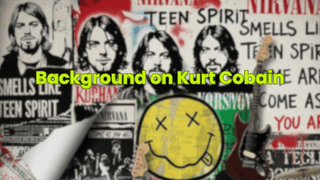
Background on Kurt Cobain
Kurt Cobain’s transformation from a sensitive child in Aberdeen, Washington, into a global grunge icon remains a haunting narrative of talent and turmoil. Born on February 20, 1967, his early happiness shattered when his parents divorced in 1976. This event profoundly destabilized his world, fueling a lifelong sense of alienation that appeared frequently in his later lyrics. Consequently, he sought solace in the local punk scene, befriending members of the Melvins and absorbing the raw, do-it-yourself ethos of the Pacific Northwest. He channeled his emotional pain into creativity, masterfully blending the melodic pop sensibilities of The Beatles with the heavy, distorted aggression of Black Sabbath. By the late 1980s, Cobain partnered with bassist Krist Novoselic to form Nirvana, unknowingly setting the stage for a musical revolution that would eventually dismantle the polished hair-metal dominance of the era.
Nirvana’s 1991 release, Nevermind, catapulted Cobain to international superstardom, a status he neither sought nor enjoyed. The lead single, “Smells Like Teen Spirit,” became an unexpected anthem for disaffected youth, yet Cobain vehemently rejected the media’s label of him as the “spokesman of a generation.” While the world celebrated his genius, he waged a private war against severe, undiagnosed chronic stomach pain and heroin addiction, which he often used to self-medicate physical and emotional agony. Furthermore, his volatile marriage to Courtney Love and the birth of their daughter, Frances Bean, intensified the media scrutiny he despised. Despite his artistic brilliance, Cobain’s clinical depression and addiction deepened, making him feel trapped by the very corporate machine he criticized. Tragically, on April 5, 1994, he took his own life at his Seattle home, leaving a legacy that fundamentally altered the trajectory of modern rock music and culture.
On April 5, 1994, Kurt Cobain died at the age of 27.Gary Smith, the electrician who discovered Cobain’s body, found him in his Seattle home. The Seattle police department, as the local law enforcement agency, quickly ruled it as a suicide due to the gunshot trauma, but it wasn’t long before doubts started creeping in. The King County Medical Examiner conducted the official autopsy and ruled the cause of death as suicide.
An electrician discovered Cobain’s body in his Seattle greenhouse, and the surrounding evidence immediately raised eyebrows. Friends and experts suggest that his death involved complexities beyond the official story. The public knew that Cobain’s drug use intensified in the months leading up to his death, as reports detail his struggles with heroin overdoses. On at least one occasion, Love found Cobain unconscious after an overdose, underscoring the chaos and emotional turmoil within their relationship. Others also found him unconscious during these ongoing battles with addiction.
However, the autopsy report generated more questions than answers. Experts argue that the heroin concentration in Cobain’s bloodstream likely sufficed to cause an overdose, yet it might have incapacitated him before he could physically pull the trigger. Consequently, Cobain’s suicide note remains a focal point for conspiracy theories. The note, which Cobain supposedly wrote, expressed deep sadness and a desire to leave the music industry. Yet, many believe someone forged or heavily altered the text. Critics have scrutinized Courtney Love, Cobain’s mother, and other figures regarding their roles in these events. While Cobain seemingly intended the note as a tragic goodbye, a haunting question persists: did he truly write those final words, or did someone else pen them?
Longtime Friend Dylan Carlson’s Stance on Cobain’s Death
Dylan Carlson, the founder of the band Earth and a close confidant of Kurt Cobain, holds a significant yet tragic role in the events surrounding the musician’s death. Despite persistent conspiracy theories, Carlson has consistently maintained that Cobain’s death was a suicide. He famously purchased the Remington Model 11 20-gauge shotgun for Cobain at a Seattle gun shop shortly before Cobain fled a rehabilitation center. At the time, Cobain assured Carlson the weapon was for protection against intruders at his Lake Washington home. Although Carlson has expressed deep regret for unknowingly facilitating the tragedy, he asserts there were no immediate red flags indicating Cobain intended self-harm during their purchase.
In contrast to Carlson’s acceptance of the official ruling, the narrative of foul play is primarily driven by Tom Grant, a private investigator originally hired by Courtney Love. Grant vehemently argues that suicide was biologically impossible due to the massive concentration of heroin—1.52 milligrams per liter—found in Cobain’s bloodstream. He contends that such a high dose would have instantly incapacitated Cobain, rendering him physically unable to manipulate the long-barreled shotgun or pull the trigger. Additionally, Grant and other skeptics point to the suspicious absence of legible fingerprints on the firearm as evidence of a staged scene.
Despite these intense debates and alternative theories, the Seattle Police Department has steadfastly upheld their original findings. In anticipation of the 20th anniversary of Cobain’s death in 2014, detectives reviewed the cold case file but found no new evidence to suggest homicide. The release of previously unseen photographs from the scene only served to reinforce their conclusion that Cobain died from a self-inflicted gunshot wound, leaving the official narrative unchanged despite decades of speculation.
The Gunshot Trauma: Did Cobain Really Kill Himself?
On April 8, 1994, the discovery of Kurt Cobain’s body in his Seattle greenhouse sparked an enduring controversy that continues to divide fans and forensic experts alike. While the King County Medical Examiner promptly ruled the death a suicide by a self-inflicted shotgun wound to the head, the physical evidence at the scene has fueled decades of skepticism. Central to the official narrative is the Remington Model 11 20-gauge shotgun found resting on Cobain’s chest, which authorities determined was used to end his life on April 5.
However, independent researchers and private investigator Tom Grant, originally hired by Courtney Love, have long challenged this conclusion. Their primary argument rests on the toxicology report, which revealed a massive concentration of heroin—1.52 milligrams per liter—in Cobain’s bloodstream. Critics vehemently argue that such a lethal dose would have instantly incapacitated him, making it physically impossible for him to manipulate a long-barreled weapon and pull the trigger. Furthermore, the absence of legible fingerprints on the shotgun, the shells, or the pen used to write the suicide note raises significant questions about whether the scene was staged.
Despite these persistent theories of foul play, forensic pathologists maintain that high opioid tolerance in people with drug addiction could allow for functionality even with lethal levels of heroin. In 2014, the Seattle Police Department reviewed the case, developing previously unseen film from the scene. They found no new evidence to contradict the original ruling, reaffirming that the trajectory of the blast was consistent with a self-inflicted wound. Nevertheless, the debate over the gunshot trauma remains a haunting aspect of Cobain’s legacy, suspended between a tragic suicide and the suspicion of a covered-up crime.
John Silva: Did Nirvana’s Rise Lead to Cobain’s Death?
Many view Nirvana’s Unplugged performance and the band’s meteoric rise in the early 90s as catalysts for Cobain’s mental and physical decline. The immense pressure of fronting the grunge movement, coupled with his clinical depression and debilitating chronic stomach pain, severely deteriorated his emotional and physical health. As he lost his sense of hope and direction during this period, his struggles intensified. Yet, despite his deep connection to his music, we must question whether the crushing weight of fame truly drove him to suicide, or if another hand played a role in his death.
What role did Nirvana manager John Silva play in these final events? Conspiracy theorists speculate that Silva and other inner-circle associates likely knew more about Cobain’s fragile state of mind than they admitted. Reports suggest that his entourage kept Cobain’s family in the dark regarding his deteriorating mental health until it was too late. Consequently, many observers believe that his family and friends never received the full picture of his final days.
In the days leading up to his death, Cobain gave Carlson cash to help purchase a shotgun, which Cobain insisted on keeping himself. Cobain’s friends, including Carlson, have expressed regret about not being able to help him before his death. Despite his struggles, Cobain authorized Geffen Records to make changes to his album In Utero, showing his continued involvement in professional decisions.
The Seattle Police Department: Investigating or Covering Up?
The involvement of Seattle police has also been a major point of controversy. According to some critics, the investigation was rushed, and Cobain’s seattle house was quickly closed off as a suicide scene without further questioning. Many researchers argue that the seattle police department may have been too quick to declare Cobain’s suicide, ignoring critical details that could have led to a deeper investigation. The quick closure of the case left many unanswered questions and fueled the suspicion that there was something more sinister at play.
Courtney Love has long been a figure of suspicion in Cobain’s death, as she was his wife at the time. Despite Cobain’s friends and family members believing that Cobain’s suicide was a personal decision, many question the role Love may have played in his mental decline. Some experts argue that Love might have had a more substantial role in his death than she has admitted, including whether Cobain’s suicide note was her idea, or whether she had a hand in Cobain’s drug usage. Though Cobain admitted to having issues with Love, it’s difficult to pinpoint whether she directly contributed to his tragic fate. After his death, Love expressed that she regretted leaving Cobain alone during his final days, reflecting on her remorse and the missed opportunity to support him.
Independent researcher Michelle Wilkins has recently spearheaded a groundbreaking multidisciplinary investigation into Kurt Cobain’s death, challenging the thirty-year-old suicide narrative with modern forensic science. Drawing on the expertise of crime scene reconstructionist Bryan Burnett and a team of specialists, Wilkins conducted meticulous reconstructions that suggest the official story is physically impossible. Their peer-reviewed findings, published in the International Journal of Forensic Sciences in early 2026, argue that the evidence points decisively toward a staged homicide rather than a self-inflicted tragedy.
Crucially, the team’s re-examination of the autopsy report revealed discrepancies that previous investigations overlooked. Wilkins highlights that Cobain’s body exhibited necrosis in the liver and brain—cellular death caused by oxygen deprivation—which typically occurs during a prolonged heroin overdose, not an instantaneous gunshot death. The biological evidence strongly supports the theory that the massive 1.52 mg/L dose of heroin incapacitated or rendered Cobain comatose long before the firearm discharged. Furthermore, forensic experts on the team noted the suspicious absence of blood or “blowback” on Cobain’s hands, a cleanliness that defies the brutal mechanics of a contact shotgun wound.
Wilkins also points to the “movie-like” staging of the scene itself. She notes that Cobain had neatly rolled down his sleeves and packed away his drug paraphernalia—actions an overdosing man could not perform. Additionally, ballistics testing demonstrated that the 20-gauge Remington shotgun would have been too long and heavy for a person in Cobain’s compromised state to maneuver. These complex findings led experts like Bryan Burnett and pathologist Cataldo Raffino to conclude that someone likely silenced Cobain and manipulated the scene to conceal the true cause of death.
The Final Days of Kurt Cobain and its Impact on Fans and the Music Industry
In the final days leading up to his death, Cobain spent time in Los Angeles, where he sought refuge from the pressures of fame. During this period, there was a notable encounter when Cali met Cobain in California, highlighting a significant moment in his final days. Additionally, a close friend, Roddy Bottum, flew from San Francisco to Seattle to support Cobain during this difficult time. There are reports that Cobain decided to escape from his troubles but was unable to escape the dark forces at play in his life. Cobain wandered aimlessly, searching for peace, but ultimately found none. It’s impossible to know whether Cobain’s family or others around him ever truly understood the extent of his struggles before the fateful day of his death.
Cobain’s death shocked fans around the world, sending ripples through the music industry that are still felt today. As news of his passing broke, fans cranked Nirvana music in tribute, gathering outside Cobain’s Seattle house and at impromptu vigils from Los Angeles to London. The loss of such a raw, authentic voice left a void in rock music, and artists across genres paid homage to Cobain’s influence. Nirvana’s unplugged performance became a haunting reminder of his talent and vulnerability, and Cobain’s music meant even more to those who found solace in his words. The death of Kurt Cobain not only marked the end of an era but also sparked ongoing conversations about mental health, addiction, and the pressures faced by artists in the spotlight.
Books, Documentaries, Film, and Television Portrayals
The fascination with Cobain’s life and mysterious death has inspired a wealth of books and documentaries, each offering new insights and interpretations. Charles R. Cross’sHeavier Than Heaven delves deep into Cobain’s childhood, his rise with Nirvana, and the struggles that led to his tragic end. Documentaries like Kurt Cobain: About a Son and Kurt Cobain: Montage of Heck use rare interviews and personal archives to paint an intimate portrait of the artist behind the legend. For those interested in the controversies, Soaked in Bleach examines the investigation and the theories that challenge the official story, while Kurt & Courtney explores the complex relationship between Cobain and Courtney Love. These works, along with others, continue to fuel debate and keep the questions surrounding Cobain’s death alive.
Kurt Cobain’s story has also found its way onto the screen, with filmmakers and documentarians exploring both his life and the enduring mystery of his death. The 2005 film Last Days offers a fictionalized account inspired by Cobain’s final hours, capturing the isolation and turmoil he experienced. Documentaries like Kurt Cobain: Montage of Heck and Kurt & Courtney provide a more direct look at his life, music, and relationships, including the often controversial role of Courtney Love.Soaked in Bleach takes a true-crime approach, focusing on the investigation and the lingering doubts about Cobain’s suicide. Through these portrayals, new generations discover Cobain’s legacy, and the debate over what really happened in his final days continues to captivate audiences.
The Legacy of Kurt Cobain: From Tragedy to Triumph
Cobain’s music continues to influence generations. From **Nirvana’s unplugged performance to the songs that defined a generation, Cobain’s death shocked fans and left an indelible mark on music history. After his passing, Courtney Love coped with her grief by wearing Cobain’s jeans and socks, and carrying a lock of his hair, seeking comfort in these intimate reminders. Cobain’s suicide reverberated throughout the music world and beyond, deeply affecting his family, friends, and millions of fans. The phenomenon of Cobain related suicide tragically underscored the profound influence his death had on some fans who struggled to cope with the loss. His **daughter Frances Bean, his family, and the rest of his bandmates—including Dave Grohl—continue to honor his memory. Cobain’s favorite poems, his passion for music, and his artistry will forever remain as a testament to his incredible talent.
There’s an eerie connection between Cobain’s childhood and the Seattle Unity Church. Rumors link the church of Cobain’s childhood to shadowy figures from his past. Despite persistent stories connecting this institution to various elements of his life, investigators have never thoroughly scrutinized the church. Just before his death, Cobain entered the Exodus Recovery Center at Daniel Freeman Marina Hospital for detox and psychological care, a move that underscored his ongoing battle with mental health. This raises a chilling question: did a hidden force orchestrate Cobain’s tragic end, intending to keep the truth buried forever?
Although authorities officially ruled Kurt Cobain’s death a suicide, countless theories propose a darker reality. We may never uncover the full truth behind this mystery. Even if the official narrative remains unchanged, the legend of Kurt Cobain continues to inspire. The world will forever cherish his music, his life, and his legacy.
While the Seattle Police Department ruled Kurt Cobain’s death as a suicide, many researchers and experts still have doubts. They point to discrepancies in the autopsy findings, the suicide note, and the high levels of heroin found in Cobain’s bloodstream, which made it physically difficult for him to pull the trigger. Some believe that there may have been foul play involved, despite the official ruling.
Cobain’s suicide note is central to the debate over his death. While it was deemed the final farewell from the rock star, some experts believe the note might have been forged or heavily altered. Friends, family, and conspiracy theorists have questioned whether Cobain really wrote those words or if someone else wrote them to frame his death as a suicide.
Courtney Love, Cobain’s wife, has been a focal point in many theories surrounding his death. Some researchers suggest that she may have had a role in either encouraging Cobain’s drug use or potentially influencing his decision to take his own life. However, there is no concrete evidence to prove this, and Love has denied any involvement.
Cobain’s family, especially Cobain’s mother, and his friends were aware of his ongoing battle with clinical depression and heroin addiction. However, many believe that his friends, like Dylan Carlson, might have been unaware of the depth of his despair and that Cobain might have felt isolated, despite the support around him. Some have even expressed regret over not being able to intervene sooner.
Nathan Brookes is a seasoned investigative writer and news contributor who has covered some of the most pressing social issues of the past decade. With a background in political science and years working in independent media, Nathan brings grit and authenticity to every story he uncovers. He specializes in writing about inequality, policy, and the real-life impact of trending news on everyday people. His storytelling is balanced, well-researched, and unflinchingly honest. Nathan believes journalism should serve the public, not the algorithm, and his pieces often give voice to stories that don’t get enough attention. Outside the newsroom, he mentors student journalists, spends weekends trail running, and reads way too many books at once. His mission is simple: tell the stories that matter—and tell them right.
Because being “in the know” is kinda hot.
Smart, funny, sometimes spicy content we handpicked so you don’t have to.
Every week, we’ll send you the latest tips, tricks, reviews and advice on how to live a healthier, and wealthier life.
All Tags
You’re our first priority. Every time.
ECG Pte Ltd (www.dumblittleman.com) is an independent publisher and comparison service, not an investment or financial advisor. Its articles, interactive tools, and other content are provided to you for free, as self-help tools and for informational purposes only. They are not intended to provide investment or financial advice. Dumblittleman does not and cannot guarantee the accuracy or applicability of any information in regard to your individual circumstances. Examples are hypothetical, and we encourage you to seek personalized advice from qualified professionals regarding specific investment or financial issues. Our estimates are based on past market performance, and past performance is not a guarantee of future performance.
We believe everyone should be able to make financial decisions with confidence. And while our site doesn’t feature every company or product available on the market, we’re proud that the guidance we offer, the information we provide and the tools we create are objective, independent, straightforward — and free.
So how do we make money? Our partners compensate us. This may influence which products we review and write about (and where those products appear on the site), but it in no way affects our recommendations or advice, which are grounded in thousands of hours of research. Our partners cannot pay us to guarantee favorable reviews of their products or services.
Our Spring Sale Has Started
You can see how this popup was set up in our step-by-step guide: https://wppopupmaker.com/guides/auto-opening-announcement-popups/
Newsletter
A weekly dose of smart hacks, hot takes, and DLM-approved finds. Inbox joy, guaranteed.
Be a part of this army and get your daily dose of dumb right into your inbox.




























Comments